Game marketers now have more traffic than ever to media buy in 2026, but quantity ≠ quality. Here's what to look at, what to be aware of, and how to build a UA stack that actually converts.
Key Takeaways
- More options, but not easier growth. Media buyers for PC games have more channels than ever in 2026, but fiercer competition for attention keeps ROAS under pressure, making the right paid media portfolio, with each channel used for its real job, more important than ever.
- There is no single "best" ad network for PC game UA. Some offer scale but can waste budget on broad audiences, while others are more PC-focused but lack scale and come at a higher cost.
- Meta and Google remain the two giants. Meta is the reach-and-retargeting play (and per Gamesight's 2026 report, often the "Closer"); Google runs full-funnel on non-social traffic: Demand Gen and YouTube for awareness, Search to capture intent, DV360 for scale, though the full stack rewards bigger budgets.
- TikTok discovers, then nurtures. Cheap reach and viral upside, but still mobile-first. Treat it as a discovery-and-assist channel, not an install engine.
- Reddit, Discord, Twitch/creators, X are more gaming-native; punch above their weight but don't scale alone. Use them for consideration, trial, credibility, and launch hype, great when paired with a conversion layer.
- PWN Games closes the structural gap. Mainstream ad platforms bill on impressions and clicks across broad, generic audiences. PWN Games adds a CPA layer on top of your existing ad mix, bringing exclusive PC-native traffic and charging only for the conversions you define, with pricing designed to be reverse-engineered from your LTV targets.
- Ads inside AI have arrived; pilot, don't bet. Google already serves ads in its AI search surfaces, and ChatGPT ads launched in February 2026. With little gaming proof yet, run small pilots for research-heavy hardcore titles and invest in AEO/GEO alongside. PWN Games has been actively monitoring this emerging space and may share more insights in the future.
The 2026 Paid Media Horizon: More Ways to Buy Players Than Ever

A few years ago, a PC game UA plan was almost boring to write down. Meta. Google. Maybe a few YouTube, Twitch creators. That was the map.
That map is gone. The number of ways to put your game in front of a player has exploded, and the ground is still moving.
Discord now runs a full rewarded-ads business with its Quests format; three years ago it wasn't an ad platform at all. The mainstream giants have been rebuilt around AI; Meta's Advantage+ and Google's Demand Gen are now automated by default, so the lever isn't targeting anymore, it's creative and conversion data. And the newest frontier is the wild one: the AI chatbot themselves now carry ads. OpenAI started showing ads inside ChatGPT in February 2026, and with 900 million-plus weekly accounts and cost-per-action bidding already live, an entirely new placement appeared where none existed a year ago.
So what does this mean for PC game user acquisition? Two things.
- A broader channel mix creates more leverage, but only with the right strategy. More channels mean more opportunities, but also more ways to waste budget, because each channel is built for a different purpose. Each one is good at a different job. Treat them all like an install machine and you'll overpay everywhere. Assign each the job it's actually built for and the whole system gets cheaper.
- Attention remains the real constraint. PC gaming is healthy; roughly 936 million players in 2025 per Newzoo, and Steam hit an all-time record of 42,042,778 concurrent users on January 11, 2026. But new releases capture only around 13% of total playtime; the rest goes to games that are years old. You're not just competing with other launches; you're fighting a decade of entrenched habits for a sliver of finite player time. That's why picking the right channel for the right job stopped being an optimization and became the whole game.
That's the point of this guide. Below, we break down the latest top ad platforms for PC game UA in 2026, built on years of running performance campaigns for PC games, covering what each one is genuinely good at and where it falls short. Then we get into the new ad channels that emerged in 2026 and the AI trends reshaping paid media, with our honest take on what they actually mean for PC gaming UA. Including the brand-new stuff nobody has fully figured out yet.
First, a reality check: No single ad network is the best for PC game UA across all funnels
It's tempting to file each network under one job; "Meta/Reddit is awareness, Google/X is conversion." Reality is messier. Many may assume one platform is best for only one stage or use in all stage as many platform claims full-funnel coverage. Neither wins on its own, you need a portfolio. And to build a good paid media portfolio, you need to understand at least two things about each network:
- Who its audience is: TikTok's young, discovery-driven crowd behaves nothing like Facebook's broad base or Reddit's genre communities. The same network can be a workhorse for one title and a dud for another; a fast-twitch action game and a slow-burn strategy sim rarely win on the same platforms, and a channel's funnel fit can shift with them too.
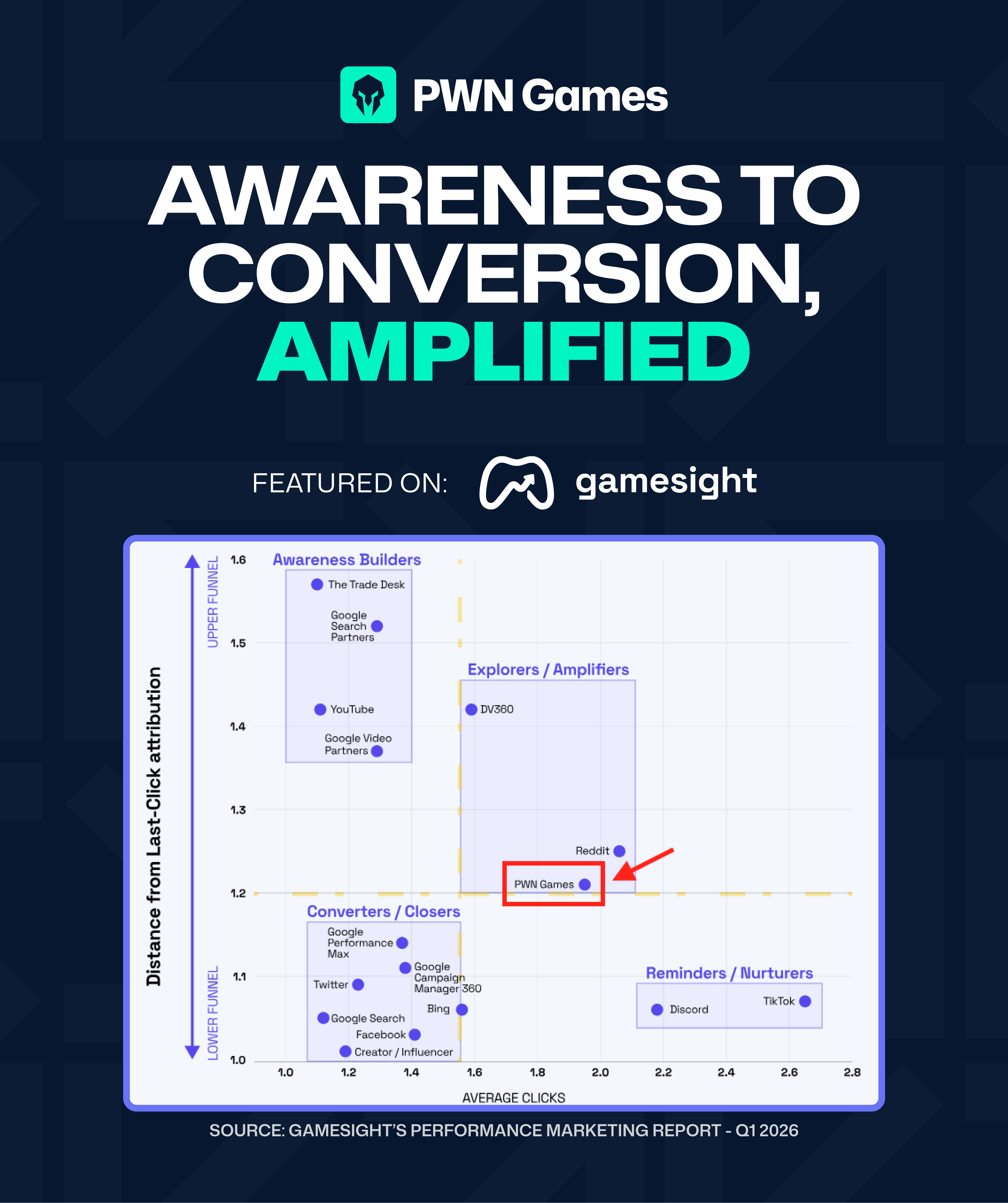
- Where it lands in real converting paths: your attribution data often shows it landing somewhere you wouldn't expect. For example, Gamesight's Performance Marketing Report 2026 found "a bifurcation between high-funnel strategies (primary Google video platforms) and lower-funnel (social media, search, and display) strategies" , i.e., most social, search, and even creator channels show up closer to conversion than the "top-of-funnel social" cliché assumes. But that's just an example from an aggregated report; what actually works for your game lives in your own attribution data and the iteration you build off it.
So read the "best used for" notes below as informed starting points, not fixed rules. Your own data and situation should always be the final guide.
Meta (Facebook & Instagram): The #1 social ad network
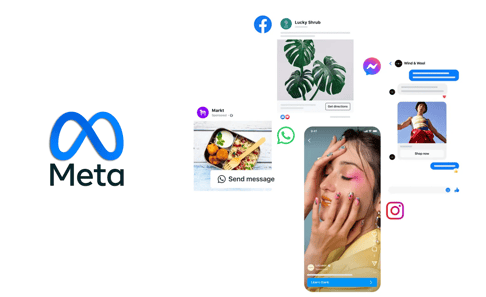
Meta is the largest social ad network in the world and still the biggest reach play in performance marketing; and in 2026, it's heavily AI-driven. Advantage+ is now the default, and after Meta removed detailed targeting exclusions in 2025, the algorithm, fed by your creative, does most of the audience work.
Strengths
- Unmatched scale and cheap top-of-funnel reach for building awareness fast.
- Best-in-class creative optimization; strong for testing hooks at volume.
- Excellent for retargeting warm audiences (wishlisters, site visitors, lapsed players).
Limitations
- PC F2P gamers are a niche audience, but Meta's tools are built for mass-market scale; you often pay high CPMs to reach people who'll never install.
- Up to 95% of Meta impressions render on phones, so you're pitching a desktop install to people on mobile, adding a cross-device jump (phone ad → boot up the PC → Steam) that leaks conversions.
- Recent updates removed granular detailed-targeting exclusions, pushing heavily toward broad targeting and AI-led delivery.
Best used for: Mainstream genres looking to build awareness at scale while driving efficient lower-funnel conversions through advanced retargeting. Worth noting: Gamesight's Performance Marketing Report 2026 places Meta among the "Converters / Closers," credited near conversion (its retargeting and algorithm tend to grab the last click). So beyond awareness, its retargeting makes it a strong lower-funnel conversion driver at scale.
Google (Search, Demand Gen & YouTube): The #1 non-social ad network
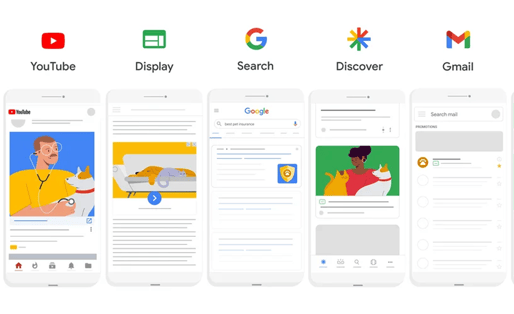
As the largest ad network in the world, Google has a vast non-social inventory spanning search, video, and the open web. When someone searches "best free strategy PC games," Google Search Ads meets them at the exact moment they're looking. Demand Gen campaigns extend that beyond search across YouTube, Discover, Gmail, and Display (standalone Display campaigns are being folded into Demand Gen, rolling out from June 2026 through 2027). And for bigger budgets, DV360 (Display & Video 360), Google's enterprise programmatic DSP, buys across the open web, YouTube, and connected TV. Same ecosystem, but a more upper-funnel, amplifier-style role than Search.
Strengths
- The #1 search engine; search intent is the highest-quality signal in paid media, putting you in front of players who are already looking.
- YouTube is the center of gaming video: trailers, gameplay, and creator content at massive scale.
- A true cross-device ecosystem; Search, YouTube, and Display reach players on desktop and PC, not just mobile.
- Mature measurement and increasingly strong AI bidding.
Limitations
- Search is only as big as the awareness you've already built. For an unknown title, nobody's searching yet, so volume is capped until demand exists.
- Demand Gen is a largely automated black box, and gaming keywords get expensive.
- Ads can surface across broad Display and app placements instead of PC-focused environments, wasting budget unless you exclude placements manually.
- DV360 carries high cost barriers, weaker connected TV (CTV) reach than some competitors, and an over-reliance on Google's own ad ecosystem.
Best used for: A full-funnel play on non-social traffic; build awareness with Demand Gen (e.g., YouTube trailers), capture that intent with Search, and, if budget allows, extend reach programmatically with DV360. However, the full stack rewards bigger budgets, and might not be the most efficient for niche PC genre.
TikTok: The Discovery & Hype Machine
TikTok is the fastest-growing discovery channel in gaming, powered by authentic gameplay clips and creator content rather than polished trailers. CPCs are among the cheapest in paid social, and its CPMs typically sit 20–40% below Meta's for reach, thanks to lower auction competition.
Strengths
- Enormous young, engaged audience and genuine viral upside.
- Creative-led: raw, funny, gameplay-first content outperforms glossy ads.
- Cost-efficient reach for awareness and hype-building around launches and updates.
Limitations
- TikTok's install machinery is mobile-first. For PC games you route traffic to the web/Steam, so it behaves more like an awareness-and-traffic channel than a direct-response install engine.
- Creative fatigue is brutal; what works this month won't next month.
- Skews younger; not every PC genre's audience is here.
Best used for: Discovery and hype via gameplay clips, but Gamesight's Performance Marketing Report 2026 classes TikTok as a "Reminder / Nurturer" (many touches close to conversion), not a one-and-done awareness hit. Use it to seed and repeatedly reinforce interest, and judge it on its assist role, not last-click.
Reddit: The PC-Native Community Play
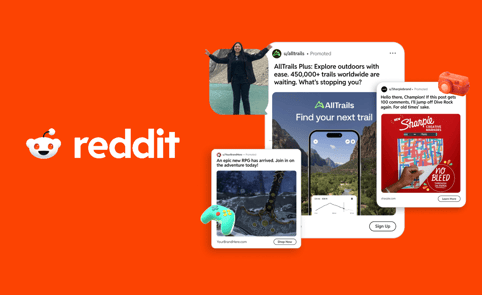
Reddit is where PC gamers actually argue about PC games. Its superpower is community (subreddit) targeting: you can serve ads directly inside r/gaming (47M+ members) or drill into genre communities like r/pcgaming, r/MMORPG, or r/FPS. In 2026, keyword and conversation targeting let you reach players actively discussing your genre, or a competitor.
Strengths
- The most granular, contextually relevant targeting for PC gaming audiences anywhere.
- High-intent enthusiasts; excellent for wishlist drives and community building.
- "Conquesting" — target the subreddits of competing titles.
Limitations
- Reddit users are famously ad-skeptical; overtly promotional creative gets torched. You have to sound like a peer and engage in the comments.
- Smaller scale than Meta/Google, with modest CTRs (typically 0.5–1.5%).
- Reddit lacks native Campaign Budget Optimization (CBO); budgets are controlled manually at the ad-group level.
Best used for: Mid-funnel consideration among genre-native players, wishlist campaigns, and indie/community launches where authenticity converts. Gamesight's Performance Marketing Report 2026 places Reddit among the "Explorers / Amplifiers," and Gamesight-measured campaigns have shown Reddit delivering roughly 3x the ROAS of other social platforms — evidence it drives real results, not just discussion.
Discord: Rewarded Reach Inside the Gaming Living Room
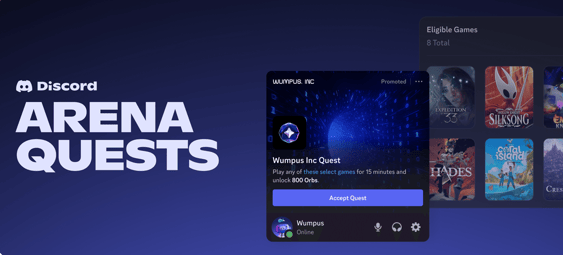
Discord is arguably the most PC-native ad platform that exists. Over 200 million monthly users, 93% of whom play games, logging nearly 2 billion hours of gaming a month across 8,000+ unique titles on PC alone. Its ad product, Quests, is opt-in and rewarded: players earn in-game items or avatar decorations for engaging.
Strengths
- Authentic, high-completion rewarded format built for an audience that hates interruptive ads; completion rates for these opt-in formats regularly top 90%.
- Uniquely good at driving trial and re-engagement ; not just a view, but a play session.
Limitations
- Discord lacks granular targeting (no interests, lookalikes, or behavioral data); you're mostly picking servers or creators and hoping the audience matches, which is more guesswork than algorithmic precision.
- Limited scale; ads are opt-in, and Discord is a community-based channel, not a conversion-driven ad platform.
- Requires extra investment; you need high-quality assets plus the rewards themselves (Discord profile frames, in-game items) to make Quests work.
Best used for: Nurture, reactivation, and trial — getting players to actually try or return to your game around launches and content drops. Gamesight's Performance Marketing Report 2026 places Discord among the "Reminders / Nurturers," with high-frequency touches close to conversion. Video Quests can do awareness too, but in a more targeted way — it's not a drive-awareness-at-scale play.
Twitch & Streamer Sponsorships: Credibility at the Top
Twitch (via Amazon Ads) and broader creator/streamer sponsorships reach an endemic, live gaming audience with a level of trust paid ads can't buy. When the right streamer plays your game, their community pays attention.
Strengths
- Authentic, influential exposure to core PC gamers; strong for launch moments and credibility.
- Live, lean-in viewing environment.
Limitations
- Awareness-heavy and hard to attribute directly to installs or revenue.
- Sponsorship pricing is variable and often front-loaded; performance is not tied to conversion on its own.
Best used for: Awareness and credibility at launch — but don't underestimate the direct-response side: Gamesight's Performance Marketing Report 2026 places creators/influencers among the "Converters / Closers" (viewer clicks the link and buys), not just awareness. Structure on performance terms (CPA) where possible so you're paying for outcomes.
X (Twitter): Real-Time Reach for Gaming Culture
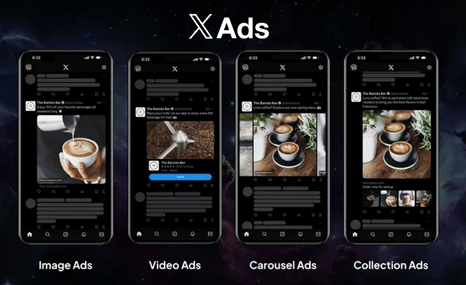
Gaming and esports culture lives on X. Announcements, patch-note debates, launch-day reactions, tournament moments — the conversation happens here in real time, which makes X a natural fit for launch windows and community-building. Its auction model bills on actions (clicks, views, conversions), and CPCs are generally low.
Strengths
- X is where the core gaming crowd (players, streamers, journalist and developers etc.) hangs out, so it's a natural place to build hype around key gaming moments (like summer showcases, the game awards etc.)
- Customizable Keyword & handle targeting. Target users who follow specific gaming journalists or competitor accounts, or who post with gaming hashtags.
- Lower barrier to entry. X generally runs lower CPCs and CPMs, making it easy to experiment on smaller budgets.
Limitations
- Platform volatility and brand-safety questions since the rebrand mean you need to watch ad adjacency carefully.
- Many players use X to read news, not to impulse-install; ads often earn profile views or follows rather than click-through installs.
- Opinions on X's ad effectiveness are divided, and the community is quick to reject overly polished, "corporate" creative.
Best used for: Real-time launch buzz, announcements, and plugging into gaming/esports conversations. Similar to Meta, Useful for awareness and engagement; though Gamesight's Performance Marketing Report 2026 places X among the "Converters / Closers," so it can drive direct conversion too, not just reach.
The New Frontier: Ads Inside AI (ChatGPT & the GEO Shift)
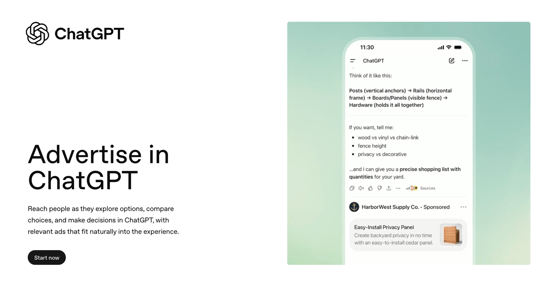
This one's brand new, and we're watching it closely; a fuller deep-dive may come in a future post. But it's too important to leave off the 2026 map.
The Google search ads already incorporate AI search ads as part of package. the ads horizontal is getting bigger and bigger.
OpenAI began showing ads inside ChatGPT in February 2026. The mechanics are unlike anything else here: ads appear as a labeled card below the answer, and targeting is contextual; matched to the topic of your conversation, not keyword lists or retargeting. Pricing has come down fast since launch (into roughly the $25–$45 CPM range, now with cost-per-action bidding), and early third-party tracking suggests click-through is lower than search but conversion quality runs higher; because the conversation has already done the qualifying (per The Growth Syndicate's ChatGPT ads tracking).
Our take: pilot it, don't lean in, yet. It's genuinely new, and there are almost no B2C or gaming success stories to point to (yet). The paid tiers are ad-free, so the ad-exposed audience skews to free-tier users, and the cost profile fits considered, research-heavy purchases more than cheap mass installs. We wouldn't move real budget here today.
What makes it worth a pilot is where player behavior is heading. Research is shifting toward AI assistants (ChatGPT is now at hundreds of millions of weekly users), and hardcore PC gamers do their research before invest serious time playing a game; they compare games features, reviews and ask "is X worth it" or "games like Y" before they commit. That's exactly the high-intent journey AI is starting to own. There's an organic side too: Generative Engine Optimization (GEO); appearing directly in the answer itself organically, which can ultimately matter more than the ad card beneath it.
Here's how we think about it at PWN Games: emerging channels like this get pilots where they fit a title, not budget shifts on hype. It's moving fast, so we test where it makes sense, and we may share more our learnings when we have more insights in the future. Subscribe to the PWN Games newsletter and stay tuned!
Best used for: Small, controlled pilots for hardcore PC titles, paired with organic AI visibility (AEO/GEO). File under "test and learn," not "scale" , for now.
The Gaps in Mainstream Ad Channels
Notice the pattern. Almost every mainstream network above is brilliant at creating or capturing attention, and almost all of them bill you on impressions or clicks, whether or not those ever become players.
That's fine at the top of the funnel. But it's also why so many campaigns look great on a CPI dashboard and terrible on a cost-per-paying-player basis. (We broke that math down in detail here: Stop Wasting Ad Spend: How PC F2P Publishers Are Fixing ROAS with Performance Networks →.)
Three structural problems remain no matter how well you run the mainstream networks:
- Auction saturation. Every publisher is bidding on the same audiences through the same platforms, pushing costs up.
- Risk sits entirely with you. You pay for every non-converting impression and click, then hope enough of them turn into revenue.
- Not PC-gaming-focused at scale. Most are broad-audience platforms, not built around PC gamers. Discord is PC-gaming-focused, but its limited reach makes it difficult to drive consistent UA growth at scale.
This is the gap a CPA performance network is built to close.
PWN Games Network: Exclusive PC Traffic, Priced on Conversions
PWN Games is a performance marketing partner with the #1 exclusive CPA network built specifically for PC gaming; and it works two ways at once.
First, we run the mainstream placements (social, display, native and more) where it brings the best conversion result for your game through our expert in-house media buying, a team that's spent years buying media for PC games.
Second, we bring exclusive, PC-native traffic you can't access through open exchanges: PC gaming portals, PC utility software, content creators, and gaming communities; sources that convert well precisely because there's less competition for them than the saturated Meta/Google auctions.
Then we package all of it into one model: CPA. You don't pay for impressions. You don't pay for clicks. You pay when a player completes an action you define; an install, a registration, a first purchase. That single shift flips the risk profile of your UA spend and lets you reverse-engineer your payouts from LTV, so your ROAS math works before you scale.
And it's more than media buying: we run the full performance stack; strategy, custom ad creative built to convert, hands-on execution, and transparent reporting.
Where PWN Games fits — honestly:
Let's be straight about what CPA is and isn't. CPA amplifies what already works; it isn't a substitute for strong fundamentals. No billing model can make up for shaky retention, unclear monetization, or fuzzy positioning; if those aren't dialed in yet, a performance network mainly helps you learn that faster and cheaper.
What CPA does is tie your spend directly to outcomes, so you scale what already works instead of gambling on impressions. The foundation always comes first: a solid game, sharp product marketing, and a real UA strategy. Get those right, and CPA is the boost, the amplifier that turns proven demand into efficient, predictable growth, powered by curated, exclusive traffic you can't reach elsewhere.
That's also why PWN Games is at its strongest once your product or campaign already has some awareness. We're the performance layer that moves players from awareness → consideration → conversion; converting existing demand into acquired, high-quality players efficiently, and diversifying you beyond the channels everyone else is fighting over.
- If you're launching cold with zero awareness, start with demand creation (Meta, TikTok, Discord video, creators) to build the top of the funnel.
- Once there's demand to convert, that's where a CPA network compounds; capturing and converting it at a price tied to real player value, across placements you're already using plus traffic you can't reach elsewhere.
Best used for: Consideration through conversion at predictable, LTV-based costs. Gamesight's Performance Marketing Report 2026 places our exclusive CPA network among the "Explorers / Amplifiers"; driving meaningful engagement that moves players toward the sale — while billing you purely on the conversion (CPA). That's why it works best once awareness exists: it accelerates and closes demand rather than creating it from scratch.
Want to talk through your PC game growth? Attribution is foundational, but it’s just one piece of the broader PC game UA picture. Book a call with PWN Games— we’ll cover everything you need to scale your PC game.
Want more like this in your inbox? Subscribe to the PWN Games newsletter for monthly tactical breakdowns on PC game user acquisition, performance marketing, and the stuff most agencies won't tell you.
PWN Games is a CPA performance marketing network specializing in PC gaming. We work with leading PC F2P publishers, including Tencent Games, NetEase Games, and Wargaming, connecting them with our 1500+ vetted traffic sources to deliver high-quality player acquisition at predictable costs.